China Top 10 CNC Milling Machining Manufacturers offers a practical starting point for global buyers seeking reliable production partners. China remains a major manufacturing base, supported by extensive machining capacity, skilled technicians, and integrated supply chains. Yet supplier quality is not uniform. A polished website cannot replace inspection records, stable process control, or verified delivery performance.
Industry data confirms the market’s importance. Fortune Business Insights valued the global CNC machine market at approximately USD 83.22 billion in 2023 and projects continued growth through 2032. MarketsandMarkets also identifies automation, aerospace production, electric vehicles, and medical equipment as major demand drivers. These reports use different definitions and methods. Their figures should guide research, not replace supplier verification.
This review evaluates manufacturers through practical criteria. These include five-axis capability, machining envelope, material experience, dimensional inspection, surface finishing, and production traceability. ISO 9001 certification can indicate structured quality management, but certification alone proves little about every finished component. Buyers should request sample inspection reports, tolerance examples, machine lists, and references for comparable work. A 0.01 mm requirement may look simple on paper. It becomes more demanding across aluminum, stainless steel, titanium, or heat-treated alloys.
Experience matters here. Strong suppliers explain fixture design, tool wear, datum control, and corrective actions clearly. They also identify risks before mass production begins. Some rankings may overlook communication delays or inconsistent small-batch support. That weakness deserves attention. This guide therefore presents China’s leading Cnc Milling Machining manufacturers as candidates for further due diligence, rather than unquestionable winners. Direct audits, prototype testing, and written quality agreements remain essential before any long-term commitment.
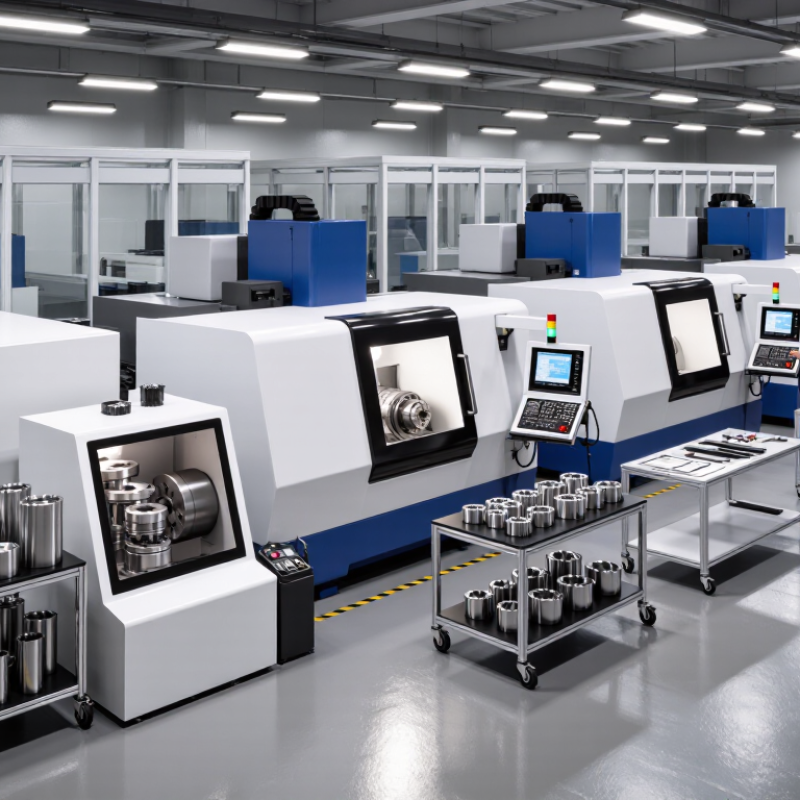
China’s CNC milling sector spans three-axis, four-axis, and five-axis production. Three-axis machines suit plates, brackets, housings, and other accessible surfaces. They are often easier to program and maintain. Four-axis machines add rotary movement around one axis. This feature can machine multiple faces with fewer manual repositioning steps. Five-axis systems move the tool or workpiece along three linear and two rotary axes. They support complex impellers, medical forms, and aerospace structures. That distinction matters.
Grand View Research’s 2024 CNC machine market analysis projects an 8.5% compound annual growth rate from 2024 to 2030. The International Federation of Robotics reported 276,288 industrial robot installations in China during 2023, representing 51% of global installations. These figures indicate strong automation capacity, but they do not prove machining quality. A practical evaluation should examine spindle speed, work envelope, probing, coolant control, and inspection records. ISO 230-2 provides a recognized method for testing positioning accuracy and repeatability. Ask for measured results, not only catalog claims. In real workshops, five-axis access can reduce setups, yet poor post-processing can create gouges or incorrect toolpaths. Even experienced teams miss this sometimes. Material behavior, thermal drift, fixture stiffness, and operator judgment still influence the final part. A capable Chinese supplier should explain these limits clearly and provide traceable inspection data.
China’s top ten CNC milling manufacturers should be ranked by evidence, not brochure claims. The central test is ISO 230-2 positioning accuracy, verified across measured axes. An advertised ±0.01 mm tolerance means little without material, part size, temperature, and inspection method. Request laser-interferometer or calibrated-artifact reports. Small detail. Big difference.
ISO 230-2:2014 defines test methods for positioning accuracy and repeatability, creating a comparable technical baseline. The ranking should record bidirectional accuracy, repeatability, backlash, and thermal drift.
Lead time deserves equal weight. Measure it from drawing approval to inspected shipment, not from the first sales email. World Robotics 2024 recorded 541,302 industrial robot installations in 2023, indicating expanding automation capacity across manufacturing. However, automation does not guarantee queue-free machining.
Review monthly capacity, setup hours, fixture readiness, and the percentage of orders shipped on schedule.
The 2024 Smart Manufacturing and Operations Survey reported that 92% of respondents viewed smart manufacturing as a major competitiveness driver within three years. That optimism needs shop-floor proof.
Use a weighted score: 40% ISO 230-2 results, 30% ±0.01 mm capability, and 30% verified lead-time performance.
Require at least three recent parts, including thin walls, deep pockets, and heat-sensitive alloys. Ask for CMM records. One weakness remains: public data are rarely standardized, and supplier samples may represent ideal jobs.
Therefore, disclose missing evidence, retest doubtful claims, and penalize unexplained variation. Perfect rankings are unlikely. Transparent uncertainty is more useful.
China’s CNC milling sector combines large production capacity with deep process expertise. The China Machine Tool Industry Association reports that China remains one of the world’s largest machine-tool producers and consumers. That scale matters, but factory size alone cannot prove manufacturing capability. A reliable Top 10 assessment should examine installed milling centers, spindle availability, machining envelope, shift utilization, and delivery consistency.
Public industry data also supports this broader view. UN Comtrade records China as a major exporter of machine tools, while the International Federation of Robotics highlights China’s leading role in industrial robot installations. These figures suggest strong automation infrastructure around modern machining operations. For each manufacturer, buyers should verify five-axis capability, repeatability data, in-process probing, and inspection equipment. ISO 9001 certification helps, but it does not replace production evidence.
Capacity must connect with practical expertise. A shop running hundreds of machines may still struggle with thin walls, difficult alloys, or tight geometric tolerances. Conversely, a smaller facility can outperform larger competitors through experienced programmers and stable process control. Public disclosures are uneven. That is a weakness. This ranking therefore weighs documented equipment, qualified engineers, quality records, and export experience rather than marketing claims. Sample parts, inspection reports, and recent delivery references deserve direct review before any contract decision.
When evaluating China’s top 10 CNC milling manufacturers, certification evidence deserves close attention. ISO Survey 2022 recorded 1,265,216 ISO 9001 certificates worldwide. This scale shows quality management remains a measurable global discipline, not a marketing phrase. For CNC suppliers, ISO 9001 should connect with controlled drawings, calibrated gauges, corrective actions, and traceable inspection records. Ask for the certificate scope, issuing body, expiry date, and audited production site. A certificate covering administration alone is not enough.
IATF 16949 adds stricter expectations for automotive machining, including process risk analysis, measurement systems analysis, and defect prevention. AS9100 supports aerospace work through configuration control, product safety practices, and stronger traceability. IAQG’s OASIS database provides a practical way to verify aerospace certification status. These standards reduce supplier risk, but they cannot replace technical audits. A real review should inspect tool-life records, first-article reports, surface-finish results, and nonconformance handling beside the machine line. ISO Survey data measures certified systems, not every delivered part. That distinction matters. Some manufacturers display impressive certificates yet provide weak evidence during sampling. I have seen this gap create rework, delayed approvals, and uncomfortable customer meetings. Certification is useful, but disciplined daily execution remains the harder test.
The table below summarizes ten objective quality and compliance dimensions used to evaluate CNC milling machining suppliers. Certification applicability depends on the facility, production scope, registered address, and audited management system.
| No. | Quality or Compliance Dimension | Primary Industry Relevance | What It Demonstrates | Recommended Verification Evidence | CNC Milling Relevance |
|---|---|---|---|---|---|
| 1 | ISO 9001 Quality Management System | General industrial manufacturing | A documented quality management system covering process control, customer requirements, corrective action, internal audits, and continual improvement. | Valid certificate showing the legal entity, audited site, certification scope, certification body, issue date, and expiry date. | High |
| 2 | IATF 16949 Automotive Quality Management System | Automotive and mobility | Automotive-specific quality controls, including risk management, traceability, defect prevention, supplier development, and production-part approval practices. | Current IATF 16949 certificate and confirmation that the specific manufacturing site and relevant processes are included in the scope. | High for automotive parts |
| 3 | AS9100 Aerospace Quality Management System | Aerospace and defense | Enhanced quality, risk, configuration-management, product-safety, counterfeit-part prevention, and traceability controls for aviation, space, and defense supply chains. | Valid AS9100 certificate, registered site information, certification scope, audit status, and applicable aerospace customer approvals where required. | High for flight-critical work |
| 4 | ISO 13485 Medical Device Quality System | Medical devices | Medical-device-specific controls for documented production, risk-based processes, validation, cleanliness, traceability, and regulatory compliance. | ISO 13485 certificate with the relevant site and scope, plus documented inspection, cleanliness, and process-validation controls. | High for regulated medical components |
| 5 | ISO 14001 Environmental Management System | All manufacturing sectors | A structured system for managing environmental aspects such as metal waste, coolant handling, chemical storage, energy use, and legal obligations. | Valid ISO 14001 certificate, environmental objectives, waste-disposal records, and evidence of controlled chemical and coolant procedures. | Useful for sustainable sourcing |
| 6 | ISO 45001 Occupational Health and Safety | Industrial production | Controls for workplace hazards associated with machining, cutting tools, lifting equipment, coolant exposure, noise, and emergency response. | Current ISO 45001 certificate, risk assessments, training records, incident procedures, and documented safety inspections. | Supports responsible supplier selection |
| 7 | ISO/IEC 17025 Calibration Capability | Testing and measurement | Technical competence and impartiality for calibration or testing laboratories, including measurement methods, uncertainty evaluation, and traceability. | Calibration certificates traceable to recognized national or international standards, equipment status labels, and laboratory accreditation details when applicable. | Critical for dimensional inspection |
| 8 | Production Part Approval Process | Automotive supply chains | A structured submission process demonstrating that production processes can consistently meet engineering and customer requirements before serial production. | Approved submission records, dimensional results, material certifications, process-flow documentation, control plans, and capability studies. | High for repeat automotive production |
| 9 | Measurement System Analysis | Precision manufacturing | Evidence that inspection equipment and measurement methods are suitable, repeatable, reproducible, and capable of detecting meaningful part variation. | Gauge repeatability and reproducibility studies, calibration records, measurement-method instructions, and inspection-equipment maintenance logs. | High for tight-tolerance components |
| 10 | Statistical Process Control | High-volume production | Use of process data, control charts, capability analysis, and reaction plans to identify variation and prevent recurring defects. | Process capability reports, control charts, sampling plans, nonconformance records, corrective-action reports, and documented reaction procedures. | High for stable batch production |
Note: ISO 9001, IATF 16949, AS9100, ISO 13485, ISO 14001, ISO 45001, and ISO/IEC 17025 certificates should be checked for validity and exact scope. PPAP, MSA, and SPC are quality practices or customer requirements rather than universal management-system certifications.
China Top 10 CNC Milling Machining Manufacturers
China’s leading CNC milling manufacturers serve automotive, aerospace, medical, and electronics applications. Their capabilities include five-axis machining, aluminum cutting, stainless steel finishing, and tight-tolerance inspection. Grand View Research valued the global CNC machine market at about USD 88.5 billion in 2023. It also projects a 7.3% compound annual growth rate from 2024 to 2030. This growth increases pressure on suppliers to prove accuracy, not merely advertise capacity.
Automotive customers often require repeatable engine housings, transmission parts, and lightweight electric-vehicle components. The International Energy Agency reported that global electric-car sales exceeded 14 million in 2023. That shift increases demand for battery trays, cooling plates, and motor parts. Aerospace machining requires traceable materials, stable processes, and careful burr control around thin walls. Medical components demand even more discipline, especially for surgical instruments and implant-related parts. A small edge can matter.
Electronics production needs miniature connectors, heat sinks, and sensor housings with clean surfaces. Industry data from the World Semiconductor Trade Statistics organization projected semiconductor market growth in 2024 and 2025, supporting continued demand for precision components. Buyers should compare inspection records, material certificates, surface-finish results, and actual sample parts. A large machine park is not enough. Some suppliers still provide impressive tolerances without explaining measurement conditions. That deserves scrutiny. The strongest candidates combine documented process control with practical experience across different materials, volumes, and design revisions.
Review installed machines, spindle availability, machining range, shift usage, and delivery consistency. Factory size alone proves little. Real output matters.
High capacity can support larger orders and steadier delivery schedules. However, hundreds of machines cannot guarantee precise parts or skilled process control.
Request machine specifications, sample parts, repeatability data, and recent inspection reports. Ask whether five-axis work is routine or only advertised.
Examine thin-wall samples, difficult-alloy projects, tolerance results, and surface-finish records. Experienced programmers often solve problems that equipment cannot.
Confirm its scope, issuing body, expiry date, and audited production site. It should support controlled drawings, calibrated gauges, and traceable inspections.
They can reduce supplier risk for demanding sectors. Automotive certification emphasizes defect prevention, while aerospace certification strengthens traceability and configuration control.
No. Inspect tool-life records, first-article reports, measurement systems, and nonconformance handling beside the machines. Certificates are useful, but daily execution is harder.
Treat rankings as starting points, not final proof. Public disclosures are uneven. Review sample parts, inspection reports, and recent delivery references before signing.
Poor verification may cause rework, delayed approvals, and difficult customer meetings. I would verify more than marketing claims. Mistakes become expensive quickly.
China has become a major destination for Cnc Milling Machining, offering advanced 3-, 4-, and 5-axis production capabilities for complex and high-precision components. This overview explains how leading manufacturers are evaluated by their machine capacity, engineering expertise, ISO 230-2 accuracy performance, ability to maintain tolerances of approximately ±0.01 mm, and reliable lead times. It also highlights the importance of process control, inspection equipment, material expertise, and flexible production support when selecting a machining partner.
The ranking focuses on China’s top ten CNC milling manufacturers according to technical capability, manufacturing scale, quality management, and industry experience. Certifications such as ISO 9001, IATF 16949, and AS9100 demonstrate structured quality systems for demanding applications. These suppliers serve a wide range of industries, including automotive, aerospace, medical devices, and electronics, producing precision housings, structural parts, tooling, and other engineered components. Together, these criteria provide a practical framework for comparing manufacturing reliability, accuracy, and overall project value.

SX Machining