China’s Metals Manufacturing sector is vast, but “top manufacturer” depends on what is being measured: steel output, product quality, processing capacity, or supply reliability. The World Steel Association reported that China produced about 1,005 million tonnes of crude steel in 2024, roughly 53% of global production. That figure shows the scale of the market. It does not, by itself, identify the best supplier for every project.
Industry rankings offer a useful starting point. World Steel Association data places major Chinese groups such as China Baowu and Ansteel among the world’s largest steel producers by crude steel output. Yet steel is only part of the picture. Aluminum, copper, and specialty alloys serve different industries and require different production capabilities. A company with a huge furnace may not be the right fit for precision sheet, corrosion-resistant components, or a small custom order. Details matter.
This guide examines leading Chinese metal manufacturers through measurable indicators, including output, product range, and documented business capabilities. Company rankings can shift with reporting periods and definitions, so figures should be checked against current company disclosures and industry sources. Treat any single “top” list with care. Production volume is not a guarantee of consistent quality, timely delivery, or suitable certification. The comparison is a starting point, not a substitute for supplier verification.
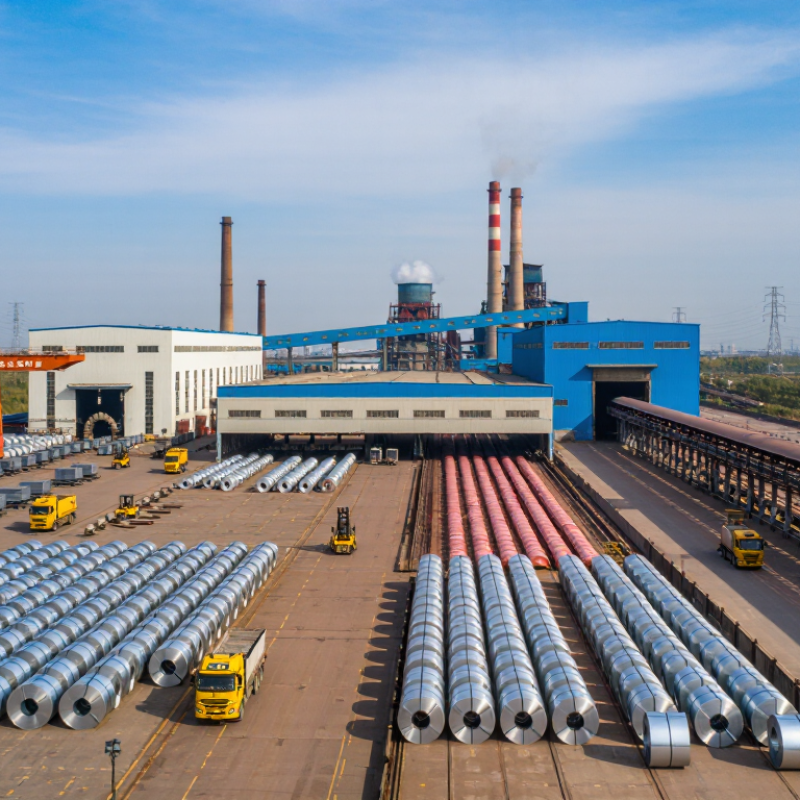
China’s metal industry is organized as a connected chain, not a single factory floor. Mining and imported feedstock supply smelters; mills then turn metal into slabs, coils, bars, and other semi-finished products. Fabricators shape these materials for construction, transport, machinery, and electronics. The chain is layered.
Scale helps explain the structure. The World Steel Association’s World Steel in Figures 2024 reports that China produced 1,019.1 million tonnes of crude steel in 2023. International Aluminium Institute data put China’s primary aluminium output at about 41.5 million tonnes that year. These figures point to large upstream capacity, but they do not show where every product is made or how much value each stage adds.
Production is spread across regional industrial clusters, where mills, component makers, ports, and customers can sit within practical shipping distance. Local strengths differ: some areas focus on smelting, while others specialize in rolling, casting, or finished parts. This arrangement can shorten supply routes and support specialized suppliers. It can also make the industry harder to map. Output figures alone miss differences in quality, processing capability, and energy use. That gap deserves attention. For buyers, checking the specific material grade, production process, and certification is more useful than judging a supplier by national output statistics.
A leading metal manufacturer is defined by consistent performance, not simply its production volume. The World Steel Association reported that China produced about 1.005 billion tonnes of crude steel in 2024. That scale makes careful supplier comparison essential. Capacity alone misleads. Buyers should check whether a plant can hold specified dimensions, grades, and surface finishes across repeat orders. Ask for recent inspection records, material test certificates, and traceability from batch to finished part. A polished sample proves little if later shipments vary.
Reliable delivery and transparent environmental data also matter. The International Energy Agency’s Iron and Steel Technology Roadmap estimates that iron and steel production accounts for around 8% of global energy-system emissions. Ask manufacturers how they measure energy use and emissions, and whether reported figures cover the actual production site. Check equipment, process controls, defect handling, and delivery history against your product’s needs. Site audits can reveal details that a sales sheet misses. No single score captures every risk; even a technically capable supplier may struggle with a sudden order change. Compare documented results, then verify key claims before committing.
China’s leading metal manufacturers are best understood by sector, since there is no single ranking that covers every alloy and application. Large integrated steel producers supply construction plate, rail, and automotive sheet, often operating blast furnaces, rolling mills, and testing laboratories on one site. Their scale can support steady volume orders. Still, output alone does not prove consistent quality.
Major aluminum producers serve transport, packaging, and building markets. Some specialize in primary metal, while others focus on extruded profiles or rolled sheet. Look for details such as alloy range, thickness tolerance, surface finish, and documented quality checks. Copper manufacturers also matter, supplying wire rod, tubes, and electrical components. Specialty-metal makers produce smaller volumes of stainless, tool, or high-temperature alloys. The distinction is important.
When comparing companies, buyers can review production capacity, traceability records, delivery performance, and the ability to meet a precise specification. A mill may offer impressive equipment but limited flexibility for small custom batches. That can be easy to miss. Public rankings also vary by year and measurement method, so treat “top” as a starting point, not a guarantee. A practical shortlist should match the material, required certification, and order size to the manufacturer’s documented capabilities.
This industry-level comparison uses 2023 production data to show the scale of China’s major metal sectors. Company names and brand names are intentionally excluded, so the table is not a company-by-company ranking.
| Scale Rank by Output | Metal Segment | China Production, 2023 | World Production, 2023 | Approx. Share of World Output | Representative Products | Industry Context |
|---|---|---|---|---|---|---|
| 1 | Crude steel | 1,019.1 million metric tonnes | 1,888.2 million metric tonnes | 54.0% | Flat steel, long steel, sections, and semi-finished steel products | China is the world’s largest crude-steel-producing country; output is reported as crude steel, not finished steel shipments. |
| 2 | Primary aluminum | 41.6 million metric tonnes | 70.6 million metric tonnes | 58.9% | Unwrought aluminum, billets, slabs, and other primary aluminum forms | China accounts for more than half of global primary aluminum production. Production figures refer to primary metal, not all downstream aluminum products. |
| 3 | Refined copper | Approximately 13.0 million metric tonnes | Approximately 26.5 million metric tonnes | Approximately 49.1% | Refined copper cathodes and other refined copper forms | China is a major refined-copper producer. Refined output is distinct from mined copper and copper-concentrate production. |
How to read this table: The scale rank compares national output volumes within this selection; it does not rank individual manufacturers. World-share figures are approximate and are calculated from the rounded production figures shown.
Sources: China’s National Bureau of Statistics, 2023 industrial production data; World Steel Association, 2023 crude steel production statistics; International Aluminium Institute, 2023 primary aluminum production statistics; International Copper Study Group, 2023 refined copper production estimates.
Chinese mills produce carbon, alloy, and stainless steel as coil, plate, rebar, wire rod, and pipe. The World Steel Association’s World Steel in Figures 2025 reports that China produced 1,005.1 million tonnes of crude steel in 2024. That figure measures crude steel, not finished goods, and should not be read as usable-product shipments. Large mills supply beams and rebar, while specialist lines roll thin sheet for vehicles, appliances, and machinery. Details matter here.
Aluminum producers cast primary metal into ingots and billets; downstream plants shape billets into window profiles, heat sinks, and transport parts. The USGS Mineral Commodity Summaries 2025 estimates China’s 2024 primary aluminum output at about 43 million metric tons. Copper processors make cathodes, rod, tube, busbar, and foil, tailoring purity and dimensions to electrical and industrial uses. A thin copper strip and a heavy busbar serve different jobs, though both use the same base metal. Published totals vary by scope: some count smelter output, while others track fabricated products or trade.
China’s leading metal manufacturers differ more by production model than by size. Integrated steelmakers handle large volumes of plate, coil, and structural sections. Their scale suits construction, shipbuilding, machinery, and infrastructure projects. They can offer consistent supply, but custom dimensions may require longer planning.
Aluminum producers focus on lightweight sheet, extrusion, and cast components for transport, packaging, and building systems. Stainless and specialty-alloy mills serve food-processing equipment, energy facilities, and chemical plants, where corrosion resistance matters. Precision fabricators add cutting, bending, welding, and surface finishing. They often support smaller orders for electronics, medical equipment, and industrial machinery. The difference matters.
A buyer should compare material grades, tolerances, testing records, and realistic delivery windows—not just stated capacity. Ask for sample inspection data and clarify whether finishing happens in-house or through subcontractors. A large mill may be unsuitable for a short custom run; a smaller fabricator may lack capacity for repeat volumes. It is easy to overvalue a broad product list. In practice, a supplier’s fit depends on the exact drawing, required certification, and how closely its process matches the intended use. Sometimes the comparison remains imperfect, because published capability ranges do not show day-to-day consistency.
They make carbon, alloy, and stainless steel as coil, plate, rebar, wire rod, and pipe. Some lines also produce beams and thin sheet.
It measures crude steel production, not finished products ready for shipment. Treating it as usable-product supply would be misleading.
Producers cast ingots and billets. Downstream plants shape billets into window profiles, heat sinks, and transport components.
Processors make cathodes, rod, tube, busbar, and foil. A thin strip and a heavy busbar serve different purposes.
Large mills handle high volumes of plate, coil, and structural sections. Fabricators may offer cutting, bending, welding, and finishing for smaller orders.
Steel supplies construction, shipbuilding, machinery, and infrastructure. Aluminum serves transport, packaging, and building systems; specialty alloys suit corrosive environments.
Compare grades, tolerances, test records, and realistic delivery times. Request sample inspection data, too. Details matter.
Not always. Custom dimensions may need longer planning, while a smaller fabricator may lack repeat-volume capacity.
They may not show day-to-day consistency or whether finishing is subcontracted. The comparison remains imperfect, and I would check the exact drawing.
China’s Metals Manufacturing industry is organized across large integrated producers, specialized mills, processors, and component makers. A leading manufacturer is typically distinguished by dependable product quality, modern production capabilities, consistent supply, technical expertise, customization options, and strong customer support. Together, these qualities help companies serve both high-volume orders and more specialized requirements.
Manufacturers produce a broad range of materials, including steel, aluminum, and copper, in forms such as sheets, coils, bars, pipes, castings, and finished components. Their capabilities vary: some focus on primary metal production and large-scale processing, while others specialize in precision fabrication or tailored products. This range supports industries including construction, transportation, machinery, energy, and consumer goods, making supplier selection dependent on the required material, specifications, production volume, and delivery needs.

SX Machining